
This post contains affiliate links. As an Amazon Associate I earn from qualifying purchases.
To stay warm without feeling bundled up, start with a smooth base layer, add one flexible warm layer, and finish with an outer layer that fits over both. Each layer should have a job and let you move. You don’t need several thick sweaters; a better fit and a lighter combination often feels easier.
The right mix depends on your weather, your plans, and how warm the places you visit will be. These checks will help you build a winter outfit you can adjust as the day changes.
Start With Three Layers That Each Have a Job
Think of layering as a flexible system, not a fixed number of garments. A base layer feels comfortable next to your skin, a middle layer adds warmth, and an outer layer handles wind or rain. On a mild day you may only need two; in colder weather, add a scarf, hat, or gloves that are easy to remove indoors.
1. Choose a Smooth, Comfortable Base
A long-sleeve tee, lightweight thermal top, or fine-knit turtleneck can sit under a sweater without adding bulk at the sleeves and neckline. Choose a fabric that feels comfortable against your skin and moves easily when you reach or bend. If you tend to overheat indoors, pick a base that looks finished on its own, like this fine cashmere turtleneck, so the next layer is easy to take off.
Check the base layer with your usual bra and trousers. Seams, hems, or a tight neckline become more noticeable under a close-fitting sweater, so try the full combination before the coldest day.
Pay attention to how the fabrics move against one another. A smooth base lets a knit slide over it; textured sleeves can catch under coat lining and make reaching feel restricted. On wet or windy days, let the outer layer handle weather protection and keep the layers beneath lighter. Judge the whole combination by movement, warmth, and comfort, not by thickness alone.
A helpful test is to dress in the full outfit and repeat a few real movements: reach for a high shelf, sit in the car, and raise both arms. If one place pulls, first remove a layer or try a smoother sleeve; a bigger coat may solve only the last symptom.
Fit note: a thin, close base under a knit builds warmth without starting from several thick pieces.
Shop the look: a lightweight thermal turtleneck, a merino wool base layer, and a fine-knit turtleneck sweater
2. Add One Flexible Middle Layer
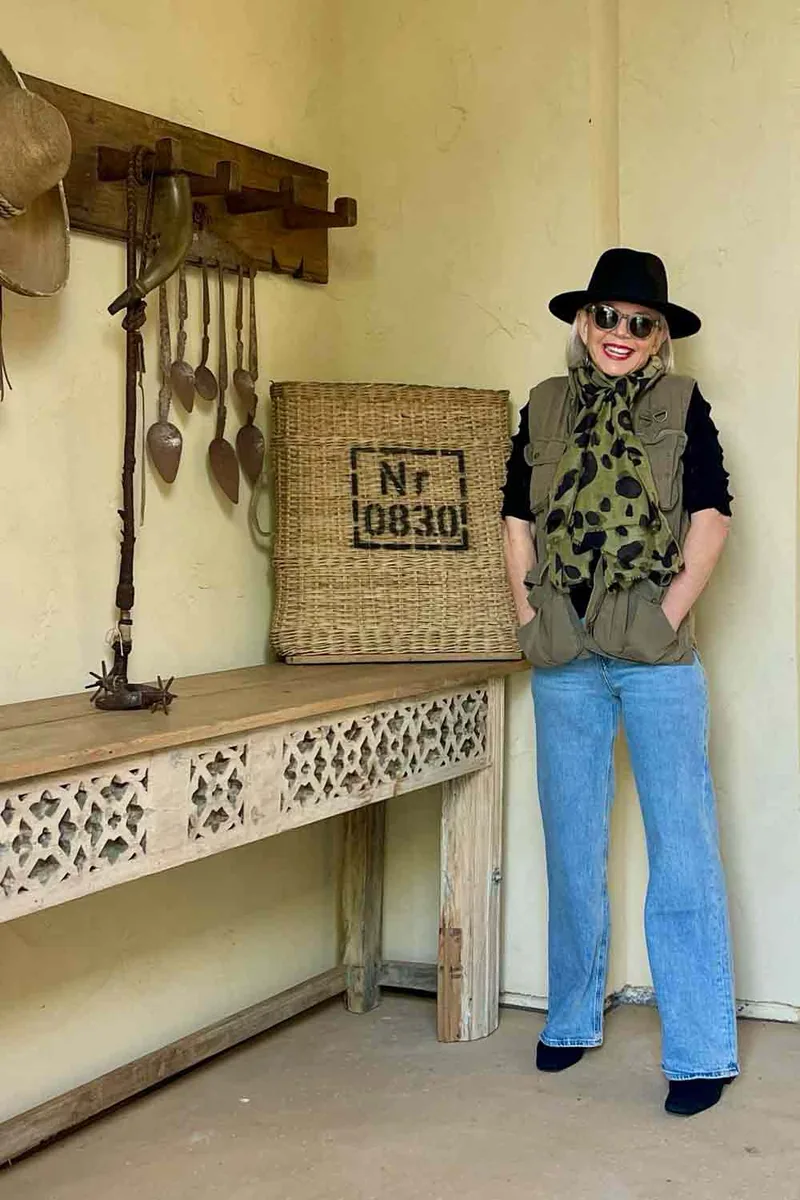
A fine sweater, cardigan, fleece, or light vest provides the next layer of warmth. Look for enough room at the shoulders and arms, without extra fabric bunching under your coat. A vest, like the utility style here over a black turtleneck, adds warmth to the body while keeping the sleeves slim.
Try the middle layer both open and closed. A zip cardigan or vest is easy to adjust during errands; a fine pullover feels smoother under a tailored coat. If you like a longer cardigan, check that its hem doesn’t catch under your coat when you sit.
Shop the look: a lightweight crewneck sweater, a packable quilted vest, and a similar utility vest
3. Check Your Coat Over the Clothes You’ll Wear

A coat that fits over a T-shirt may pull when you add a sweater. Try it on with your winter layers, then fasten it, sit down, reach forward, and lift your arms. The shoulders and upper sleeves should let you move without the lining tugging or the front straining.
If a coat feels tight when fastened, compare another cut or size instead of relying on an open front all day. A little ease through the arms helps you wear a sweater underneath. For more on how the hem works with skirts and trousers, see our jacket-length guide.
Shop the look: a notch-lapel wool-blend coat, a long puffer coat, and an oversized plaid scarf
Use Shape and Length to Keep the Layers Easy to Wear
When every layer is thick and loose, fabric bunches at the waist, elbows, or underarms. Vary the texture and length instead: a smoother base, a soft sweater, and a coat with enough structure to hold its shape. Leave the outer layer open if that feels comfortable, or fasten it when warmth matters more.
Compare your coat with the trousers or skirt you wear most often. A coat that ends around the knee may overlap a midi skirt; a hip-length coat can make straight-leg trousers feel more in balance. Neither is a rule, so check the hems while walking and sitting, and look from the side as well as the front.
Volume is easier to manage when only one layer is generously cut. If your sweater and coat are both roomy, try a straighter trouser or a smoother middle layer; if the coat is tailored, a little more ease in the sweater may feel better. Move warmth away from the arms with a fine knit under the coat and a scarf or gloves that come off indoors.
Plan for the Change From Outdoors to Indoors

Warm shops, cars, and homes can make a heavy outfit uncomfortable after a cold walk. Keep the middle layer presentable on its own, and choose accessories you can remove quickly. A scarf, hat, or gloves add warmth outside without another sweater indoors.
For a day of errands, an easy formula is a long-sleeve top, a zip cardigan or soft hoodie, and a coat with room for both. For a dressier plan, try a blouse, a fine sweater or blazer, and a warm coat. If your plans include a lot of walking, pair the layers with comfortable shoes; our guide to shoes for straight-leg jeans covers several practical options.
Copy this look: plaid flannel shirt + cream hoodie + black straight jeans + white sneakers, with a coat over the top outdoors.
Shop the look: a plaid flannel shirt, a fleece hoodie, and a zip-up cardigan
Adjust the Formula to Your Weather and Plans
On a mild day or one spent mostly indoors, a breathable long-sleeve top, one fine cardigan, and a light coat may be enough. Keep extra warmth in a scarf or gloves rather than a thick sweater that becomes uncomfortable in a warm car or dining room.
For colder or windy weather, add warmth where it helps without making every layer thicker. A lightweight thermal top under a fine knit can feel easier than two chunky sweaters. Let the outer layer block wind or light rain, and check the full outfit fastened.
If the temperature will change through the day, choose a middle layer that opens or closes easily and still looks finished on its own. A long commute, errands on foot, and a seated dinner call for different amounts of warmth. The easiest outfit is one you can adjust without rebuilding it.
Troubleshoot the Spots That Feel Bulky

When an outfit feels bulky, notice where the extra fabric gathers before changing the whole combination. One small adjustment often helps more than buying a larger coat or removing every warm layer.
- At the underarms or sleeves: try a smoother, thinner sleeve under the sweater or coat, and avoid stacking several cuffs at the wrist.
- At the waist: check whether long hems bunch when you sit. A shorter base layer, a different tuck, or a cardigan worn open may feel easier.
- At the neckline: if two collars or a thick scarf crowd the area, keep one neckline simple and use a lighter scarf, as with this soft scarf over a fine turtleneck.
Accessory upgrade: a soft, lighter scarf adds warmth at the neck without crowding it.
Make one change at a time, then repeat the same movements: sit, reach forward, and raise your arms. This shows whether the problem is the garment’s cut, fabric catching, or simply too many layers in one place.
Shop the look: Calvin Klein soft fringe scarf, a cashmere beanie, and touchscreen leather gloves
A Quick Winter Layering Check
- Can you reach forward and lift your arms without the coat pulling?
- Does the base layer feel comfortable after several hours?
- Can you remove the middle layer without disturbing the rest of the outfit?
- Do the coat hem and the clothes underneath move easily together when you sit and walk?
Frequently Asked Questions
How many layers should I wear in winter?
Start with the weather and your plans. A base, one warm middle layer, and a coat are a useful starting point, but you may need fewer layers in mild weather or an extra accessory in colder conditions.
How do I keep layers from bunching under my arms?
Choose smoother sleeves and thinner layers where garments overlap. Try the complete outfit and move your arms before leaving; if the coat lining catches, try a different sleeve shape or a roomier coat.
Can I wear a bulky sweater under a winter coat?
Yes, if the coat has enough room for the sweater and you can move comfortably. If the sleeves, shoulders, or front pull when the coat is closed, try a lighter middle layer or a coat with a more comfortable cut.
Featured photo: 📷 Cindy Hattersley